 Login


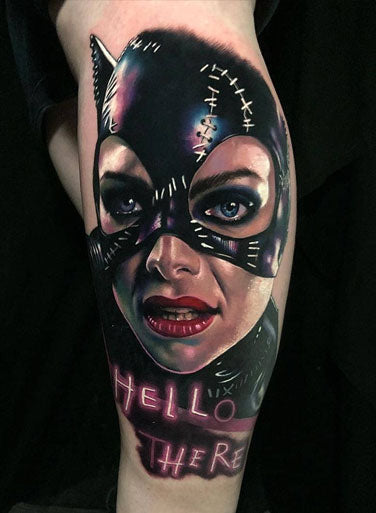
For fine-line realism, it's all about precision. The detail, the shading, the textures, and the smooth transitions allow for little room for inconsistent needle movement. This is one of the reasons for the popularity of rotary pen machines amongst artists who specialize in fine-line, realism, dot work, and other styles of art that require detail.
The pen-style machine is ergonomic in shape, and its rotary motor moves the needle evenly like that of a traditional drawing instrument. But having the proper machine doesn't mean the tattoo is clean and has fine lines. There is a lot of technique, needling, hand speed, machine, and skin preparation.
Why Tattoo Pens Work Best for Fine Line Realism
A good rotary pen can give a fairly good and uniform needle drive. This can help to make delicate movements easier to control, especially for making small details and/or building up tonal values over time.
The pen grip also enables the artist to hold the machine in the familiar drawing position. This may be helpful when going around curves, facial features, hair, and other complex designs.
These are desirable qualities for fine line realism:
· Consistent needle movement
· Comfortable ergonomic handling
· Controlled vibration
· Some models have adjustable strokes
· Can be used with various cartridge configurations
· Good maneuverability for small details
But that's only half the story when it comes to machine performance. Even if the voltage is set correctly, the needle is not deep enough, or if the machine is moved too slowly, it may still cause skin damage or cause inconsistent results.
When Working with Fine Line Work, use Needles
There is no "fine line needle" that is suitable for all projects. The configuration of the needles should be consistent with the scale, detail, and technique desired.
Round liners (RL) are frequently employed to create a very accurate outline and details. Larger groupings can create very heavy marks, and smaller groupings will create very fine marks.
Round shaders (RS) may be helpful if the artist requires a softer shading or a desired texture that does not produce a concentrated line like a liner.
Smoothing and transitions over larger areas can be achieved using Magnums. For greater coverage, larger configurations are typically more suitable.
For instance, an artist may choose a smaller round liner for finer features on the face, and a larger grouping to shade the entire area around those facial details. The type of cartridge to be used should be determined by the technique of the artist and the manufacturer's recommendations.
Hand Speed and Needle Movement Match Up
Fine line realism is a machine/hand coordination affair.
If a machine is not being run aggressively and moves too slowly, excessive trauma can result. Running too fast can result in less defined lines or poor lines.
Instead of trying to find a specific voltage number, try to establish a repeatable relationship between:
These variables should be used on suitable synthetic skin prior to client work. Create linear, curved, small circles, stippling patterns, and gradual shading transitions.
Don't Expect to Get the Maximum Needle Depth with Fine Lines
A common error is that a fine line must be very deeply printed to be seen. In fact, too deep a cut can cause more damage and delay healing.
Select the correct needle exposure and use for the machine, cartridge, and client's skin. Avoid repeatedly going over the same line simply because it initially appears lighter.
Generally, it is better to have a clean, controlled pass rather than too many passes.
Pen Machines for Dotwork & Stippling
Rotary pens will also work well for stippling and dotwork applications, where consistency is vital.
Artists make individual dots rather than drag the needle continuously to make texture and gradients. The distance between the dots and the number of dots indicate light or dark.
For cleaner stippling:
· Position the machine in the same place.
· Do not use automatic dots.
· Subsequent dark areas should be built up in stages.
· Do not fill in any random dots in light areas.
· Practice changing from dense to sparse dot patterns.
Hand control is most important, but these repetitive details can be easier to handle with the movement of a pen machine.
Realism Shading with Smooth Realism
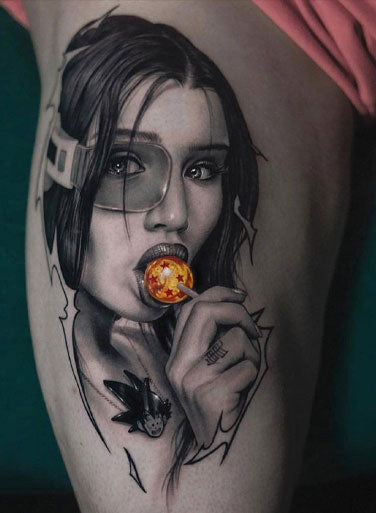
Toning is essential to realistic tattoos. A tattoo pen may be helpful for making these transitions step-by-step using the right movement of the hand with the right needle.
Artists can add value gradually rather than aiming to achieve the final darkness at once.
For instance, a realistic portrait might be composed of:
1. Light foundational shading
2. Mid-tone development
3. Deeper shadows
4. Small contrast areas
5. Last-minute details and highlights.
This allows for subtle gradients to be maintained, rather than abrupt changes.
Stroke Length Matters
Artists can also change the length of their strokes with some rotary pens. The distance the needle moves per cycle is determined by stroke, and stroke may also affect the feel of the machine in various techniques.
Some fine movements might benefit from a shorter stroke, and others from a longer stroke.
There is no universal setting for fine line realism. Artists should know how to set their machine for their own work, NOT another artist's work.
Want better fine line results? Here are some tips:
1. Work at a steady pace, not fast. Fine line work is best done by moving slowly and deliberately, rather than quickly.
2. Test all new configurations. The behavior of various cartridges, inks, machines, and man-made skins can vary.
3. Keep hand stable. Unwanted movement can be minimized by stable hand positioning.
4. Stretch skin in a suitable way. A good amount of tension in the skin can help make the motion of the needle more predictable.
5. Avoid excessive passes. Over-rotation can lead to a higher risk of trauma.
6. Maintain equipment cleanliness. For professional tattooing, use the right barriers and cartridges that are new and sterile.
Study healed work. What may appear to be a flawless line immediately after the tattooing process can look quite different once it has healed. Don't just look at fresh ink; look at healed results.
Should I use a Tattoo Pen?
A rotary pen may be a great option for artists looking for fine line realism. It is ergonomic, has a smooth and steady needle drive, and is compatible with various line work and cartridge setups, which make it versatile for fine line work, stippling, and smooth shading.
However, there is a limit to what the machine can do for technique. It is most beneficial to realize that needle configuration, stroke, power, hand speed, depth, and tension of the skin all work together for the best results.
The best pen, then, is the one that allows the artist to control the pen in a predictable manner. Take some time to practice how it reacts on practice skin, work on one thing at a time, and master the process before doing it for real clients.
FAQ
1. Is a rotary pen machine suitable for fine-line tattoos?
Yes, because they can supply a constant movement of needles for precise and delicate line work, excellent ergonomics, and a perfect hand to control the tool for such detail work. Moreover, they can be used for various techniques, such as dotwork, stippling, and shading, with the right needles and settings.
2. Which needle should you use for fine line realism?
Small round liners are perfect for delicate line work, while round shaders can be used for shading, and magnums can assist in creating larger areas of tone. It is essential to consider the design, work methods, and desired effects when choosing the right equipment.
3. How can an artist achieve a cleaner fine-line tattoo?
Moreover, it is critical to pay attention to the movement of the tool during the lining process, the working depth, the stretching of the skin, and the settings of the machine. It is necessary to avoid damaging the delicate skin by using coarser needles or keeping the motorized tool in one spot for too long. A lot of practice on synthetic skin is required before actual tattooing to master the necessary techniques, such as line placement, curves, stippling, shading, and others.


 CustomIronsTattooSupplies